Low Calorie Pasta Replacement That Actually Works for Me
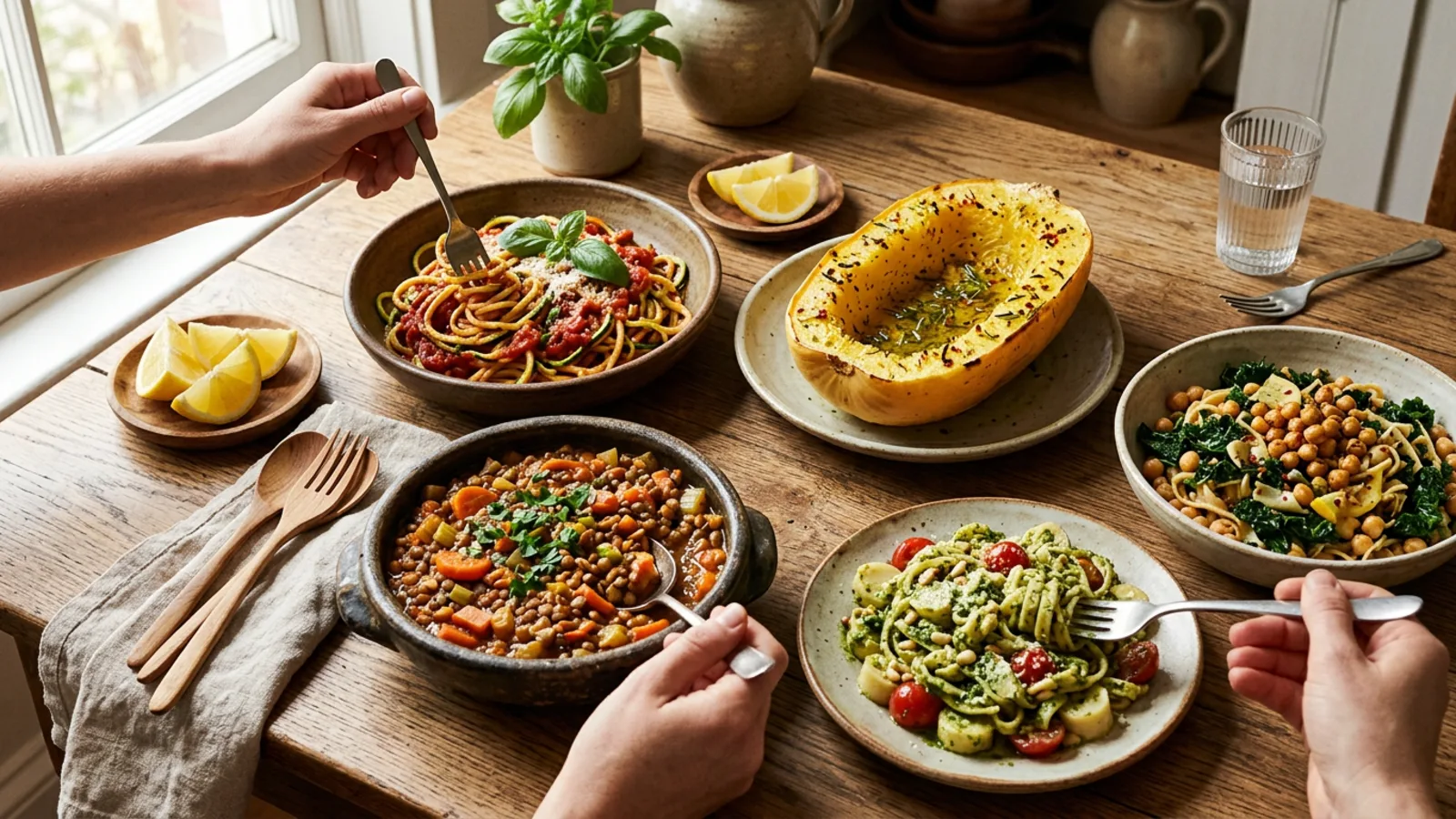
The first time I tried to make a low calorie pasta replacement feel genuinely worth eating, I ended up with a watery mess on my plate and a serious craving for the real thing. I kept thinking there had to be a version that was both light and actually satisfying, not a sad imitation that reminded me of everything I was missing. This article walks you through exactly what I discovered: the ingredients, the techniques, and the real recipes that changed how I eat pasta-style meals for good. Anyone who has pushed a bland bowl of zucchini noodles to the side and ordered takeout instead will recognize exactly what this is trying to fix.
What Keeps Pasta Replacement in My Weekly Lineup
There is something about the smell of zucchini noodles hitting a warm pan with good olive oil that feels almost ceremonial to me now. It is earthy and fresh at the same time, and it signals that something worth eating is coming.
A few years ago, I went on a long work trip and ate out almost every night for two weeks. Heavy plates, no control over what went in, no vegetables that were not drowning in butter. By the time I got home I felt sluggish, and I remember standing in my kitchen thinking: I need something that feels like a real meal but doesn’t cost me three days of energy.
When the Right Dish Changes Everything
That was the moment zucchini noodles with creamy avocado pesto and grilled chicken entered my life. The flavors are bright and green, the avocado pesto is silky and rich, and the chicken sliced thin over the top makes every forkful feel complete. It is not a lighter version of pasta as a compromise. It is a genuinely different dish that happens to be a fantastic low calorie pasta replacement, and I make it most weeks still.
The key is leaning into what makes the ingredients special rather than pretending they are something else. Zucchini has a clean, mild freshness that works beautifully with bold sauces. When I stopped comparing it to wheat pasta and started treating it as its own thing, the whole experience shifted.
Low calorie noodles like these keep me consistent not because I am being disciplined, but because I actually look forward to them. That distinction matters more than any plan I have ever followed.
Protein anchoring a lighter base is a combination that works well beyond pasta too. My high protein meals for weight loss breakdown goes deeper into why that pairing holds you through the day.
Pasta Replacement Without the Guilt or the Cardboard
I spent a long time making pasta replacement the wrong way. Bland, watery, textureless. I would rinse zucchini noodles and throw them in a pan wet, then wonder why everything turned into a puddle.
The old belief I held was that anything labeled healthy had to taste like a compromise. I genuinely thought that was the deal you made. You either ate food that tasted good or food that was good for you, and the middle ground did not really exist.
Spaghetti squash with roasted tomato sauce completely broke that belief. When you roast the squash until the edges go golden, the strands pull apart with a satisfying bite that wheat pasta cannot replicate. Topped with a jammy sauce from slow-roasted cherry tomatoes, torn fresh basil, and finely shaved parmesan that barely melts from the heat below, it is the kind of plate you photograph before you eat it.
This is real food. It fits beautifully into low calorie meals without feeling like a category of its own. It belongs on a dinner table, not in a diet plan. My healthy dinner recipes collection is built entirely around this same principle, real plates that happen to be good for you, never diet food dressed up as dinner. The recipe below is the one I come back to whenever I want to prove this point to myself again.
Spaghetti Squash with Roasted Tomato Sauce, Fresh Basil, and Shaved Parmesan
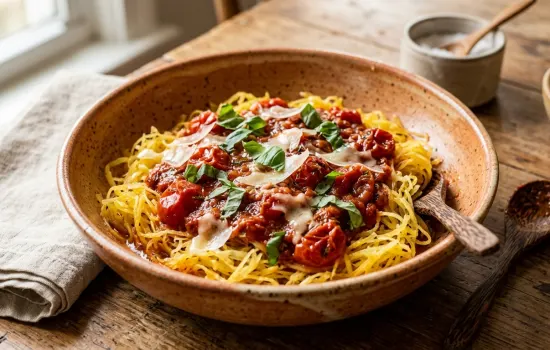
Serves 2 | approx 310 kcal per serving | 10g protein | 31g carbs | 18g fat | 55 min
Ingredients:
- 1 medium spaghetti squash, approx 900g, halved lengthways and seeds removed
- 400g cherry tomatoes
- 2 cloves garlic, skin on
- 2 tbsp olive oil, divided
- Salt and black pepper to taste
- 20g fresh basil leaves, torn
- 30g parmesan, finely shaved with a peeler
Method:
- Preheat the oven to 200 °C. Place the spaghetti squash halves cut-side down on a lined baking tray. Roast for 35 to 40 minutes until the flesh is tender and the edges show light golden colour.
- While the squash roasts, toss the cherry tomatoes and whole garlic cloves with 1 tbsp olive oil, salt, and black pepper on a second tray. Roast in the same oven for 25 to 30 minutes until the tomatoes are jammy and beginning to caramelise at the edges.
- Remove the garlic from its skin and crush it roughly. Combine the roasted tomatoes and garlic in a bowl and press gently with a fork to form a loose, textured sauce. Season again to taste.
- Use a fork to scrape the spaghetti squash strands from the skin into a warm serving bowl. They should pull apart easily in long noodle-like threads.
- Spoon the roasted tomato sauce over the squash strands. Drizzle with the remaining 1 tbsp olive oil.
- Top with torn basil and shaved parmesan. Serve immediately while the parmesan melts slightly from the heat.
If keeping real wheat pasta on the table is more your speed, my piece on healthy pasta recipes for dinner covers a completely different way into the same problem, no swapping required.
Zucchini Noodles with Creamy Avocado Pesto and Grilled Chicken
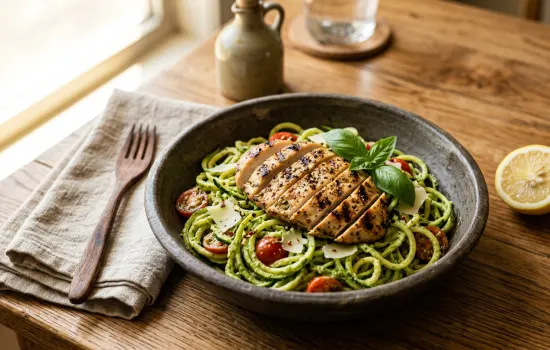
Serves 2 | approx 560 kcal per serving | 51g protein | 18g carbs | 33g fat | 30 min
Ingredients:
- 2 medium zucchini, approx 400g total, spiralized into noodles
- 1 tsp fine salt for drawing out moisture
- 2 boneless chicken breasts, approx 300g total
- 1 tsp olive oil for the chicken
- 1 tsp dried oregano
- Salt and black pepper to taste
For the avocado pesto:
- 1 ripe avocado, approx 160g flesh
- 25g fresh basil leaves
- 1 garlic clove
- 2 tbsp olive oil
- Juice of 1 lemon, approx 30ml
- 2 tbsp water to thin if needed
- Salt and black pepper to taste
Method:
- Lay the spiralized zucchini noodles on a clean kitchen towel. Sprinkle with 1 tsp fine salt and let sit for 10 minutes. Pat firmly dry with the towel. This step is non-negotiable. Wet noodles will make the sauce slide off and the texture will suffer.
- While the noodles drain, prepare the avocado pesto. Add the avocado flesh, basil, garlic, olive oil, and lemon juice to a blender. Blend until completely smooth and silky. Add water one tablespoon at a time if the mixture is too thick. Season generously with salt and pepper. The colour should be a deep, bright green.
- Rub the chicken breasts with olive oil, dried oregano, salt, and black pepper. Heat a grill pan over high heat. Cook the chicken for 5 to 6 minutes per side until cooked through with visible char marks. Rest for 3 minutes before slicing thin on a diagonal.
- Warm a non-stick pan over medium heat with a tiny drizzle of olive oil. Add the dried zucchini noodles and toss gently for 1 to 2 minutes just until warmed through. Do not overcook. They should still have a slight bite.
- Remove the pan from the heat. Add the avocado pesto and toss immediately to coat every strand. The residual warmth from the noodles will loosen the pesto without cooking it.
- Divide between two plates. Lay the sliced chicken over the top so every forkful gets both noodles and protein. Finish with a squeeze of fresh lemon and a crack of black pepper.
The Pantry Staples My Pasta Replacement Relies On
I remember the afternoon I pulled everything out of my pantry and laid it on the counter. I had been eating the same three things on rotation, my pantry was full of things I bought with good intentions and never used, and I decided that day to start fresh.
What went back in was deliberate. Zucchini became a constant. I keep two or three in the fridge at all times because they spiralize in two minutes and hold up beautifully under a bold sauce. Spaghetti squash lives on my counter because it keeps well and turns into something genuinely impressive with almost no effort.
Shirataki noodles were the real surprise. They look strange in the packet, they need a proper rinse and a dry toast in a hot pan to get rid of any off-putting smell, but once you do that they take on whatever flavour you cook them in. Garlic, butter, shrimp, wilted spinach. The result is something that feels luxurious and completely restaurant-quality despite being one of the lightest low calorie foods I know.
Plant based versions of this approach work just as well. My high protein vegetarian meals collection runs on the same idea, satisfying plates built without meat as the anchor.
The Finishing Details That Make the Difference
The other staples I keep close are chickpea pasta for nights when I want something closer to the real thing, good olive oil, capers, lemon, parmesan, and a rotating supply of fresh herbs. These are the ingredients that make a low calorie pasta replacement feel refined rather than restricted.
I also keep a jar of toasted pine nuts and walnuts in the fridge because a handful scattered over a bowl of zucchini noodles changes the whole texture and makes the dish feel genuinely finished. Little details like that are what separate a plate you eat quickly just to be done with it from one you actually savour.
Shirataki Noodles with Garlic Butter Shrimp and Wilted Spinach
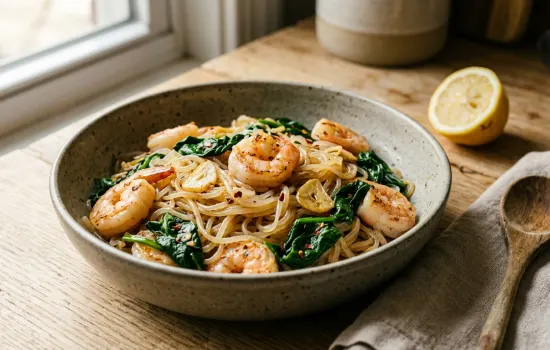
Serves 2 | approx 275 kcal per serving | 32g protein | 5.5g carbs | 16g fat | 20 min
Ingredients:
- 400g shirataki noodles, drained and rinsed thoroughly under cold water
- 250g raw shrimp, peeled and deveined
- 3 garlic cloves, finely sliced
- 20g unsalted butter
- 1 tbsp olive oil
- 90g baby spinach
- Juice of half a lemon, approx 15ml
- Salt, black pepper, and a pinch of chilli flakes
Method:
- After rinsing the shirataki noodles well, add them to a dry non-stick pan over high heat. Toss continuously for 3 to 4 minutes until any residual moisture evaporates and the noodles squeak slightly against the pan. Remove and set aside.
- In the same pan over medium-high heat, add the olive oil. Season the shrimp with salt, pepper, and chilli flakes. Cook for 1 to 2 minutes per side until pink and just cooked through. Remove and set aside.
- Reduce heat to medium. Add butter and sliced garlic to the pan. Cook for 60 seconds until the garlic is golden and fragrant, stirring constantly so it does not burn.
- Add the spinach and toss quickly in the garlic butter until just wilted, about 1 minute.
- Return the shirataki noodles and shrimp to the pan. Toss everything together over medium heat for 1 minute. Squeeze lemon juice over the top.
- Divide between two warm bowls and serve immediately. The dish should look glossy, lightly sauced, and deeply fragrant.
The Small Steps That Make or Break Pasta Replacement
I used to be the person who prepped everything last minute, cutting corners on the step I thought did not matter.
There was one batch of shirataki noodles I rushed through without dry-toasting them properly. That shortcut cost me. The result was a rubbery, slightly strange bowl eaten standing at the counter debating whether to just make eggs instead. Technically edible. Not the dish it could have been.
Managing moisture is the technique that actually matters. Zucchini noodles need to be salted and patted completely dry before they ever hit a pan; skip that, and everything else is wasted effort. Spaghetti squash wants a long enough roast to pick up light gold edges, since that’s what gives the strands a satisfying chew instead of a soft, forgettable texture. Shirataki noodles require a dry toast, no exceptions. Five minutes of patience there transforms the whole result.
When I get the texture right, there is a specific bite that tells me I am done. Slightly firm, a little resistance, holding the sauce without drowning in it. That is the sign. The satisfying bite you won’t believe is lighter is not an accident. It is the result of not rushing the one step that mattered.
Leftovers and Storage for Pasta Replacement
Wednesday is usually the hardest day of my week. Meetings run long, I get home late, and if there is nothing ready I will eat whatever is fastest. Having a clear structure for the whole day is what stops those evenings from unraveling. My 1800 calorie meal plan for weight loss maps out exactly how that looks from morning to dinner.
My Sunday prep ritual is what saves me on those nights. I roast a full spaghetti squash, make a big batch of avocado pesto kept airtight with a piece of plastic wrap pressed directly onto the surface so it does not brown, and store the components separately rather than fully assembled. My brother-in-law started doing the same thing after watching me eat well on days when he was ordering junk food by default, and now he texts me every Sunday when he is prepping his squash. It became a small shared routine between us.
How to Store Each Type Without Losing Texture
The key with zucchini noodles is to store them raw and unsalted until you need them. Salt them, pat them dry, and warm them fresh each time. Assembled zucchini noodle dishes go watery overnight and the texture suffers badly.
Spaghetti squash keeps well in a sealed container for up to four days. The roasted tomato sauce keeps the same. Reheat them separately in a pan with a tiny splash of water, then combine. The texture of the squash strands holds up beautifully this way, still with that same comforting pull, lighter than anything wheat-based, and not tired at all.
Shirataki noodles are actually better stored cooked because they firm up slightly in the fridge, which improves the texture on day two. Refresh them in a hot pan with a little butter and they are genuinely good again.
Low calorie snacks that bridge the gap between meals matter too. I keep low calorie fruits like sliced pear or a handful of grapes in the fridge so there is always something easy and clean to reach for when the evening stretch between prep and dinner gets long.
Building a proper dinner routine around meals the whole family actually wants to eat is something I went deep on separately. My piece on healthy family dinner ideas covers the full framework if weeknight stress is the real problem.
Chickpea Pasta with Roasted Vegetables and Lemon Herb Dressing
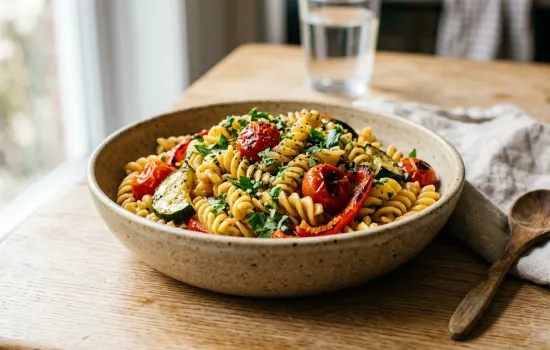
Serves 2 | approx 475 kcal per serving | 18g protein | 55g carbs | 22g fat | 35 min
Ingredients:
- 160g chickpea pasta, dry weight
- 200g cherry tomatoes, halved
- 1 medium zucchini, approx 180g, cut into half-moons
- 1 red bell pepper, approx 160g, deseeded and cut into strips
- 1 tbsp olive oil, divided
- Salt and black pepper to taste
For the lemon herb dressing:
- 1 tbsp olive oil
- Juice of 1 lemon, approx 30ml
- 1 small garlic clove, finely grated
- 15g fresh flat-leaf parsley, finely chopped
- Salt and black pepper to taste
Method:
- Preheat the oven to 220 °C. Spread the cherry tomatoes, zucchini, and red bell pepper on a large lined baking tray. Drizzle with 2 tbsp olive oil, season generously, and toss to coat. Roast for 20 to 25 minutes until the edges are caramelised and the tomatoes are beginning to burst.
- While the vegetables roast, cook the chickpea pasta in well-salted boiling water for 1 minute less than the packet instructions suggest. You want it firmly al dente. Drain and drizzle with a little olive oil to stop it clumping.
- Make the dressing by whisking together the olive oil, lemon juice, grated garlic, chopped parsley, salt, and pepper in a small bowl. Taste and adjust the lemon if needed. It should be bright and sharp.
- Combine the drained pasta and roasted vegetables in a large bowl. Pour the dressing over immediately while everything is still warm so the pasta absorbs the flavour.
- Toss well and taste for seasoning. Divide between two plates. Add an extra scatter of fresh parsley and a crack of black pepper to finish.
The Pasta Replacement Habit That Actually Sticks
Finding a low calorie pasta replacement that actually works is not about finding one magic ingredient. It is about learning which combinations of textures, sauces, and techniques turn a simple swap into something worth making again and again. More recipes built on exactly that principle live inside my healthy pasta recipes collection, refined weeknight meals that feel genuinely luxurious without the effort.
New recipes and lighter meal ideas show up in the newsletter every now and then, worth a look if this kind of cooking is something you want more of.
Mounir, Healthy lifestyle creator at LeanLife Journey.