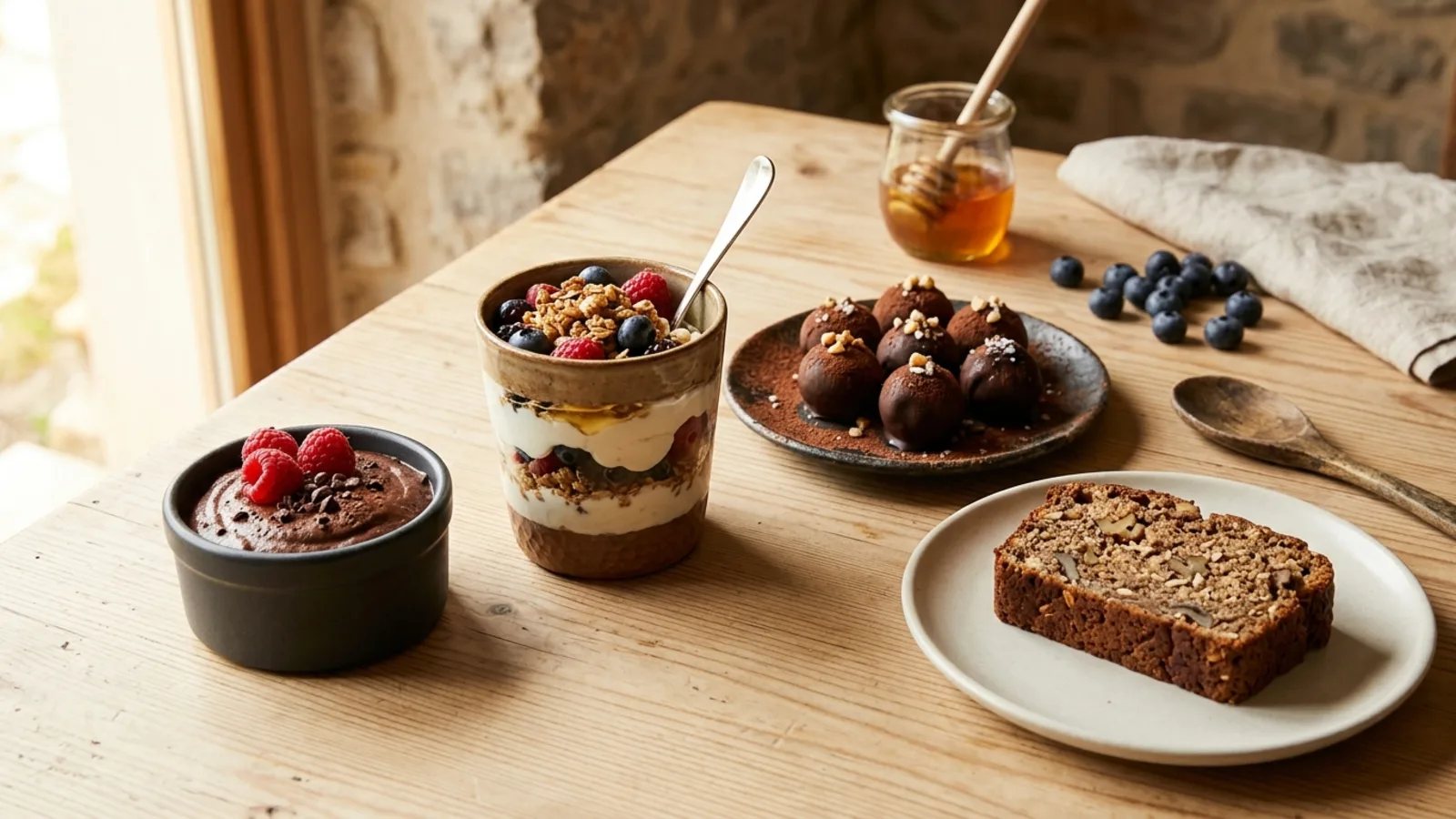
Protein Desserts: How I Hit My Protein and My Sweet Tooth
Why does the sweet tooth always show up right after dinner, exactly when you feel like you’ve already eaten enough?
For months I finished dinner satisfied and then found myself standing in front of the open fridge not long after, hunting for anything with sugar in it. I knew healthy protein desserts were a thing people talked about online, but I assumed they were chalky, sad, and basically punishment with chocolate flavoring. What I found instead changed how I eat every single evening, and this article is going to show you exactly what I make, why it works, and how to build a rotation of genuinely delicious high protein desserts you actually look forward to. Stick around because the recipes below are the real reason I never raid the kitchen anymore.
The Real Reason Late-Night Cravings Kept Winning
For the longest time I had the same pattern every single night. I would finish dinner, feel completely fine, and then somewhere around 9pm the craving would hit hard. Biscuits, a piece of chocolate, whatever was in the cupboard. I would eat it and feel guilty, then feel hungry again thirty minutes later.
What I eventually figured out is that dinner was the problem. Not the volume, but the protein content. When a meal does not carry enough protein, the body keeps sending hunger signals, and those signals often arrive as a craving for something sweet because the brain associates quick sugar with fast fuel.
Healthy protein desserts solve both sides of that at once. They give you real flavor and real texture, something that genuinely feels like a treat, and the protein hits the satiety signal in a way that a plain biscuit never does.
The frozen chocolate peanut butter stack I make takes two hours to set in the freezer and tastes genuinely indulgent, like something between ice cream and a fudge brownie. The mug cake takes 75 seconds in the microwave and comes out with a fudgy center that is hard to believe is sitting at over 20 grams of protein.
About two weeks into eating one of these in the evening, I noticed something. I had completely stopped going back to the kitchen after dinner. The craving just wasn’t there to fight anymore. That was the moment I understood these were not just a healthier swap. They were a structural fix.
Protein doing this same job across every meal of the day, not just dessert, is what my high protein meals for weight loss piece breaks down in full.
The Ingredients That Make It Work
The difference between a protein dessert that tastes amazing and one that tastes like a gym supplement is entirely in what you put into it. I spent a lot of time testing combinations before I understood which ingredients do the heavy lifting.
Greek Yogurt Is Doing More Than You Think
Greek yogurt is the foundation of almost every recipe I make in this space. It is thick and creamy enough to replace heavy cream in many applications, and it adds a natural tanginess that makes sweet flavors pop in a way that plain cream never does.
A single 200g serving carries around 20g of protein before you add anything else. That is a serious base before a single gram of protein powder enters the picture.
One practical tip I stick to without exception: always use full fat or 2% Greek yogurt in desserts. Low fat versions go watery when you mix them and lose the thick, dense texture that makes these recipes feel like real food. Do not skip this detail.
That same thick, protein-heavy base works just as well before noon. A smaller version of the cheesecake cups, minus the biscuit base, is one of the quickest healthy breakfast ideas I make when mornings are rushed.
Nut Butters Do the Heavy Lifting Here
Natural peanut butter and almond butter are what make protein-packed desserts taste indulgent rather than compensatory. They add richness, they add depth, and they carry their own protein content at around 8g per two tablespoons.
The flavor combinations that work best in my kitchen: dark chocolate and peanut butter is the obvious classic and it earns that reputation. Vanilla and almond butter is quieter and more elegant. Cacao and tahini is the one that surprises people most, it tastes complex and almost luxurious.
I used to buy flavored protein bars from the shop and tell myself they were a good enough substitute. When I switched to making high-protein sweet treats at home using Greek yogurt and real nut butters, I genuinely never went back. The difference in flavor and texture is not small.
The Frozen Version That Feels Like a Real Treat
The first time I made a frozen layered protein dessert, I pulled it out of the freezer, took a spoonful from the top layer, and stopped. Firm but not icy, dense but not hard, with a peanut butter layer in the middle that had set into something fudgy and rich, nothing like the sad frozen yogurt cups I’d tried before.
What makes the frozen format work so well for high protein desserts is a combination of things happening at once. Cold temperature intensifies sweetness, which means you need less added sugar to get the same impact. The Greek yogurt base firms up into something that feels genuinely closer to ice cream than yogurt. And the layers of peanut butter fudge and dark chocolate chips create real textural contrast with every spoonful.
The detail that took a few batches to figure out: pull the stack out of the freezer five minutes before you eat it. The center softens just enough and the whole texture shifts from frozen-solid to perfect.
This is the recipe I make most often when I want something that genuinely feels like dessert and not just a healthy version of one. It earns its place every time.
Chocolate Peanut Butter Power Stack
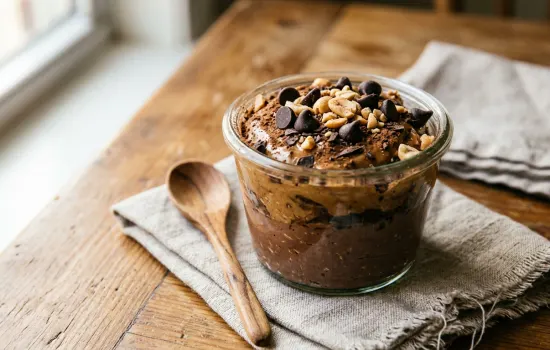
Serves 2 | approx 390 kcal | 20 min + 2 hrs freeze
Ingredients:
- 300g Greek yogurt (full fat or 2%)
- 2 scoops chocolate protein powder (60g)
- 4 tbsp natural peanut butter (64g)
- 2 tbsp raw cacao powder (16g)
- 2 tbsp honey (42g)
- 1 tsp vanilla extract
- 30g dark chocolate chips
- Pinch of sea salt
- 2 tbsp crushed roasted peanuts (20g) to finish
Method:
- Mix Greek yogurt, 1 scoop chocolate protein powder, 1 tbsp honey and vanilla extract together until smooth and completely combined.
- In a separate bowl mix peanut butter, remaining protein powder, cacao powder, remaining honey and sea salt until thick and fudgy. Add 1 to 2 tsp warm water if needed to loosen slightly.
- Spoon half the yogurt mixture into the base of two glasses or small bowls.
- Add a layer of the peanut butter fudge mixture over the yogurt, spreading it evenly.
- Top with the remaining yogurt mixture and smooth the surface.
- Scatter dark chocolate chips and crushed peanuts over the top. Freeze 2 hours for a firm set or refrigerate 1 hour for a softer texture. Serve straight from the freezer or fridge.
This one lives right at the edge between yogurt and proper ice cream, which is exactly the territory my healthy ice cream collection was built around.
Getting 15-20g Protein Without the Chalky Aftertaste
The most common thing I hear from people who have tried protein dessert recipes and given up is that they tasted powdery, artificial, or like a supplement shake wearing a disguise. I had the same experience early on, and it is fixable once you understand exactly why it happens.
One Scoop, Not Two: The Rule That Fixed the Chalkiness
Chalkiness comes from two things: using too much protein powder in one sitting, and using it without anything acidic to balance it. Those are the two rules I now follow without exception.
First, never use more than one scoop per serving. Beyond that, the protein flavor becomes dominant and the whole dessert tastes chemical regardless of what else is in it. One scoop is the ceiling.
Second, always combine protein powder with something acidic. Greek yogurt works. A squeeze of lemon juice works. The acid neutralizes the chalky aftertaste at a chemical level and the result tastes clean.
But the best way to hit 15 to 20 grams of protein in a dessert is sometimes to skip the powder entirely. Greek yogurt gives you around 20g per 200g serving. Cream cheese combined with yogurt adds richness and extra protein. Natural peanut butter contributes 8g per two tablespoons. Eggs in baked or microwaved versions add protein without any flavor interference at all.
The recipe below is exactly that approach. It hits 18g protein with zero protein powder, zero chalkiness, and the kind of texture that makes people ask you for the recipe. These are the healthy protein dessert recipes I find myself recommending most to friends who are new to this.
Vanilla Greek Yogurt Cheesecake Cups with Berry Compote
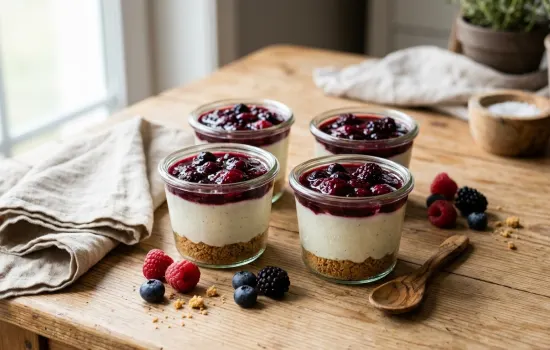
Serves 4 | approx 280 kcal | 15 min + 1 hr chill
Ingredients:
- 500g Greek yogurt (full fat)
- 100g cream cheese
- 1 scoop vanilla protein powder (30g)
- 2 tbsp honey (42g)
- 1 tsp vanilla extract
- Juice of half a lemon
- 80g digestive biscuits, crushed
- 1 tbsp melted butter (14g)
- 200g frozen mixed berries
- 1 tbsp honey (21g)
- 1 tsp lemon juice
Method:
- Mix crushed biscuits with melted butter until combined. Press evenly into the base of 4 small glasses or ramekins. Refrigerate while you make the filling.
- Simmer frozen berries, honey and lemon juice in a small saucepan over medium heat for 8 minutes until jammy and slightly thickened. Leave to cool completely.
- Beat Greek yogurt, cream cheese, protein powder, honey, vanilla and lemon juice together until completely smooth and creamy.
- Spoon the yogurt cheesecake filling over the biscuit bases, filling each glass about three quarters full.
- Spoon cooled berry compote over the top of each cup.
- Refrigerate minimum 1 hour before serving. Keeps 3 days in the fridge covered.
Cold, set desserts like this one are their own category, and my chilled cream collection goes deeper into that exact style of dessert.
Cold, Layered, and Not the Same as the Cheesecake Cups
Sunday evening in my kitchen usually involves making a batch of the cheesecake cups. Four of them, lined up in the fridge, covered with a plate. The first one is gone Sunday night. The other three carry me through the week.
What makes the layered format so satisfying is that every element does something different. The crushed biscuit base gives a textural anchor, something firm and crumbly to contrast everything above it. The yogurt cheesecake filling is rich, tangy and cold in a way that feels genuinely decadent. And the berry compote on top cuts through the creaminess with brightness that keeps every spoonful interesting.
Why the Frozen Version Hits Different
The cheesecake cups and the frozen power stack are different enough that I keep both in rotation depending on the week. The cheesecake cups are the reliable weeknight option. Already made, cold, ready to pull out of the fridge in five seconds flat. They are the ones I eat when I want something satisfying and easy without any thought involved.
The frozen stack is the weekend version. It takes more patience, it takes a two-hour freeze window, but when you pull it out and let it soften for five minutes, the result feels closer to a proper dessert event than a snack. The layers, the fudge texture, the cold chocolate chips, it is genuinely impressive for something built from six ingredients.
On nights when I want something warm instead of cold, the mug cake is the answer. Five minutes total, one mug, and a center that comes out soft and molten. It is the fastest of the three options by a long distance.
That warm option is what comes next, and it might be the one I reach for most often when the week has been long and I want dessert in my hands in under five minutes. That same patience pays off with frozen desserts more broadly. Low calorie ice cream guide runs on the exact same freeze-and-wait logic, just built around fruit instead of yogurt.
Dark Chocolate Protein Lava Mug Cake
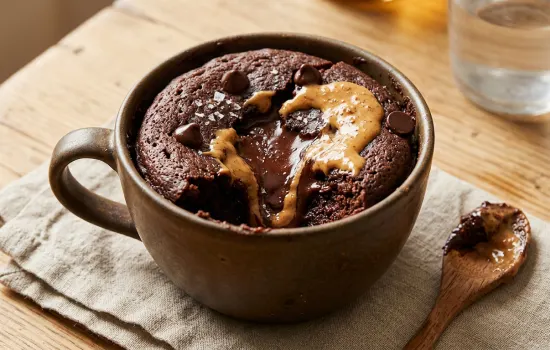
Serves 1 | approx 320 kcal | 5 min
Ingredients:
- 1 scoop chocolate protein powder (30g)
- 1 tbsp raw cacao powder (8g)
- 1 large egg
- 3 tbsp oat milk (45ml)
- 1 tbsp natural peanut butter (16g)
- 1 tsp honey
- 1 tsp baking powder
- 15g dark chocolate chips
- Pinch of sea salt
Method:
- Add protein powder, cacao powder, baking powder and sea salt to a large mug and stir dry ingredients together.
- Add egg, oat milk and honey. Mix vigorously with a fork until completely smooth with no lumps.
- Drop dark chocolate chips into the center of the batter without stirring them in. They will create the lava center.
- Microwave on high 60 to 75 seconds. The edges should be set but the center should still look slightly underdone.
- Drop peanut butter on top immediately after cooking so it melts slightly into the surface.
- Eat straight from the mug while warm. The center will be soft and fudgy like a lava cake.
When These Actually Fit Into Your Day
Timing matters more than most people realize when it comes to healthy protein desserts. The same recipe can feel completely different depending on when you eat it. Thinking about food by the time of day rather than just the ingredient list is the same logic behind my 1800 calorie meal plan for weight loss, which maps breakfast, lunch, and dinner the same deliberate way.
Post-Dinner: Closing the Kitchen for the Night
Post-dinner is the timing I started with and still use most often. The goal is to satisfy the sweet craving and close the kitchen for the night. When the dessert is cold, creamy and already in the fridge, that is exactly what happens.
Post-Workout: The 60-Minute Window
Post-workout within 60 minutes is where the mug cake earns its place. Protein absorption is at its most efficient in that window, and something warm and chocolatey feels genuinely earned after training. At 24g protein and a five-minute prep time, it fits perfectly.
The Afternoon Slot People Overlook
The afternoon slot is the one people overlook most. On days when lunch was light and 4pm arrives with an energy crash, a cheesecake cup or a small version of the frozen stack is the thing that stops you reaching for a bag of crisps or something you will regret later. These work as proper high-protein sweet treats in that window, not just as evening desserts. On days when a spoon feels like too much effort, my low calorie smoothies article covers the same afternoon slot in drinkable form.
Here is how I match them specifically: the mug cake is my post-workout answer, warm and fast and substantial. The cheesecake cups are my post-dinner ritual, cold and already made and requiring zero effort on a Wednesday night. The frozen power stack is my Sunday afternoon moment, the one that I actually sit down for and take my time with.
If I am being honest, the cheesecake cups are the ones I come back to most. There is something about pulling a cold, layered, berry-topped cup out of the fridge at 9pm after a long day that feels like a proper reward. And 18g of protein later, the kitchen stays closed.
New dessert ideas and recipes land in the newsletter every now and then, a good reason to stay subscribed if this is the kind of thing you want more of.
Mounir, Healthy lifestyle creator at LeanLife Journey.