Lunches That Keep Me Sharp All Afternoon
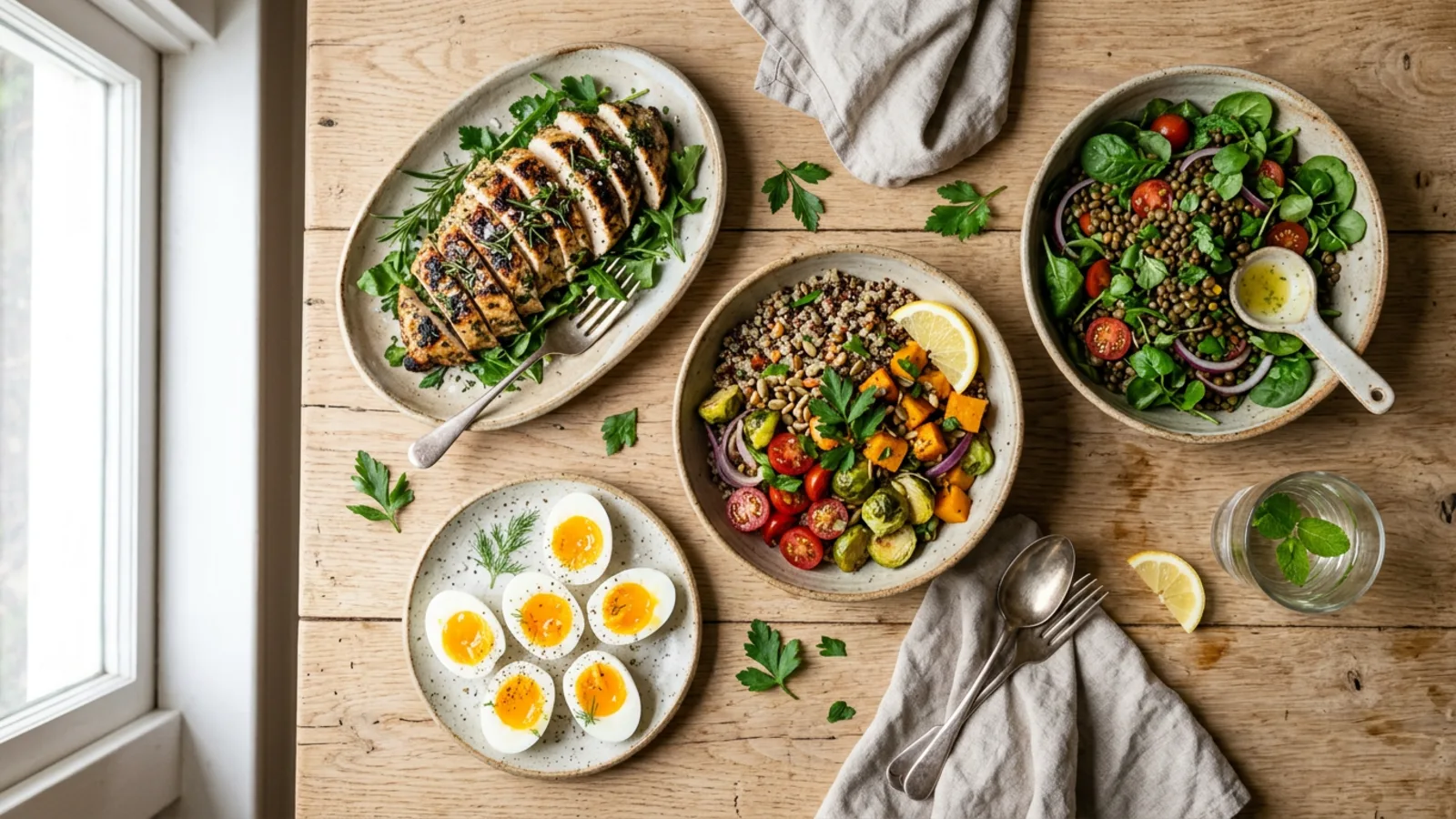
There was a 3pm wall I could set a clock by. Heavy eyes, foggy thoughts, and the desperate urge to find something sweet in the kitchen just to get through the next hour. Once I started building my lunches around real protein, that wall simply disappeared. In this article I’m sharing the healthy high protein lunch ideas that changed my afternoons, along with the exact formula I use and four recipes you can start making this week.
Why Most Lunches Crash You by 3pm
I remember sitting at my desk one afternoon, genuinely unable to finish a sentence I was writing. I had eaten a big bowl of plain pasta with a little tomato sauce two hours earlier and felt completely hollow. That was the pattern for years. A sandwich stacked mostly with bread and a thin scraping of filling, a salad with no real protein to speak of, a pasta dish that felt satisfying for forty minutes and then left me reaching for biscuits.
The reason these meals fail is straightforward. High carbohydrate, low protein lunches cause your blood sugar to spike sharply and then drop just as fast, leaving you running on empty right when you need to focus. Protein slows that whole process down. It takes longer to digest, it keeps blood sugar more stable, and it genuinely keeps hunger quiet for hours rather than minutes.
The fix I landed on was simple. Aim for at least 30 grams of protein at lunch, built around a real protein source rather than hoping bread and a scraping of hummus would do the job. Once I started doing that, the 3pm crash became something other people complained about and I quietly did not. Protein doing this kind of work across every meal, not just lunch, is something the high protein meals for weight loss article goes into properly, worth reading alongside this one.
The Protein-Anchor Lunch Formula
The framework I use for every lunch is three things in the right order. Protein first, then color, then a bright dressing or sauce that makes the whole plate feel like something worth sitting down for. That last part sounds minor but it genuinely changed everything for me.
Protein first means choosing your anchor before anything else. Halloumi, chickpeas and quinoa together, a piece of sea bass, a sirloin steak, duck breast. These are not garnishes, they are the point. Color means roasted vegetables, fresh greens, something on the plate that makes it look alive. Roasted sweet potato, wilted spinach, charred pak choi, bright cherry tomatoes.
The dressing is where the magic is, and I say that as someone who spent years eating dry grain bowls and wondering why I dreaded lunch. A tahini drizzle loosened with lemon juice, a sharp chimichurri with fresh parsley and a hit of chili, a sesame ginger sauce that coats everything in warmth. These are the details that separate a meal you look forward to from one you eat out of obligation.
I still remember the first time I made a tahini lemon sauce and poured it over a bowl of roasted chickpeas and quinoa. The thought that hit me was simple: this is a restaurant meal. Twenty minutes in my own kitchen. That realization was the beginning of me actually enjoying the process of building protein-packed lunch ideas into my week.
The Proteins I Keep Coming Back To
Not every protein source fits a lunch routine equally well. Some are too heavy for midday, some take too long, some just do not hold up in a container if you are prepping ahead. Over time I narrowed it down to the ones that actually work in practice, not just in theory.
Halloumi is the fastest hot protein I know. Two minutes each side in a hot pan and it is done, golden and slightly crispy and nothing like the rubbery version most people have had. Chickpeas roasted with smoked paprika take twenty minutes but need almost no attention. Sea bass is the lightest option and the one I reach for when I want something that feels genuinely fresh rather than filling. Beef sirloin and duck breast are for the days when lunch needs to feel like an occasion rather than a habit.
The overlap between all of them is that none require complicated technique. A hot pan, good seasoning, the right timing. Once you have made each of these two or three times, the process becomes automatic and the result stays consistently good.
The Vegetarian Version That Actually Fills You Up
My go-to vegetarian high protein lunch is a grain bowl built on halloumi, chickpeas, and quinoa, and the reason it works so well is that these three together create something genuinely complete and filling. Chickpeas and quinoa together provide a full amino acid profile, and halloumi brings a dense, salty chew that satisfies in a way most vegetarian options simply do not.
The halloumi sears to a deep golden crust in about two minutes each side in a hot pan, and that crispy exterior against the soft chickpeas is the textural contrast that makes the whole bowl interesting. The chickpeas come out of the oven slightly crispy at the edges after twenty minutes with smoked paprika and cumin, warm and fragrant and nothing like anything out of a tin. The quinoa absorbs the dressing and ties every element together.
Roasted Red Pepper and Halloumi Grain Bowl with Tahini Lemon Drizzle
The roasted red pepper caramelizes beautifully in the oven, going from raw and grassy to sweet and slightly jammy at the edges. The baby spinach wilts just enough under the warm ingredients without turning limp. Then comes the tahini lemon drizzle, and that is the moment the bowl stops being a collection of healthy ingredients and becomes something you actually want to eat.
This is one of my most-made healthy protein lunch ideas, and it is the recipe I share most when friends ask where to start. Here it is in full.
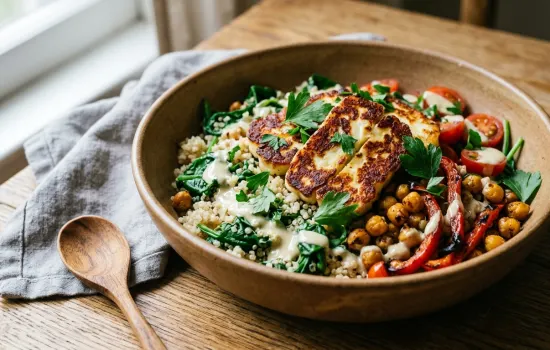
Serves 2 | approx 500 kcal per serving | 24g protein | 47g carbs | 24g fat | 30 min
Ingredients:
- 120g halloumi, sliced 1cm thick
- 150g cooked quinoa (from 70g dry)
- 1 large red pepper, sliced (150g)
- 100g cherry tomatoes, halved
- 80g baby spinach
- 150g chickpeas, drained and rinsed
- ½ tbsp olive oil
- 1 tsp smoked paprika
- 1 tsp cumin
- Salt and black pepper
- 2 tbsp tahini
- Juice of 1 lemon
- 1 garlic clove, minced
- 4 tbsp warm water
- Pinch of salt
Method:
- Preheat oven to 200 °C. Toss chickpeas and red pepper with 1 tbsp olive oil, smoked paprika, cumin, salt and pepper. Spread on a baking tray and roast 20 minutes until golden and slightly crispy at the edges.
- Whisk tahini, lemon juice, garlic, warm water and salt together until smooth and pourable. Set aside.
- Heat remaining olive oil in a non-stick pan over high heat. Sear halloumi slices 2 minutes each side until deeply golden and crispy.
- Build the bowl: quinoa as the base, then spinach, roasted chickpeas and pepper, cherry tomatoes, and halloumi slices on top.
- Drizzle tahini lemon sauce generously over everything and serve immediately.
Plant based protein at lunch is something worth exploring properly. The high protein vegetarian meals collection is built entirely around this kind of thinking, satisfying plates without meat as the anchor.
When You Want Meat: Beef, Fish and Duck That Actually Work at Lunch
Healthy high protein lunch ideas do not have to mean the same grilled chicken and rice bowl on repeat. That version exists, it works, but it gets boring fast and boredom is what sends people back to sandwiches. These three options are what I reach for when I want something that genuinely feels special at midday.
Seared Beef Sirloin Bowl with Roasted Sweet Potato and Chimichurri
The Seared beef sirloin sliced thin over roasted sweet potato with chimichurri is the first. The beef gives you iron and deep, savory flavor, the sweet potato adds body without making you heavy, and the chimichurri cuts through both with brightness and a little heat. The key is slicing the steak thinly against the grain after resting it, which gives you tender ribbons of meat rather than a chewy slab.
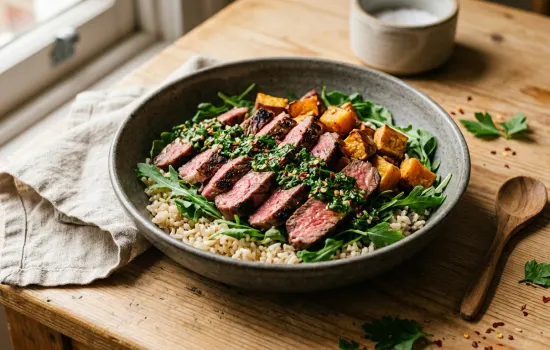
Serves 2 | approx 550 kcal per serving | 34g protein | 26g carbs | 27g fat | 25 min
Ingredients:
- 300g beef sirloin steak
- 200g sweet potato, cubed 1cm
- 100g rocket leaves
- 100g cooked brown rice (from 50g dry)
- 1 tbsp olive oil (for cooking)
- Salt, black pepper, garlic powder
- 20g fresh parsley
- 2 garlic cloves
- 1 tbsp olive oil (14g, for chimichurri)
- 1 tbsp red wine vinegar (15ml)
- Pinch of chili flakes
- Salt to taste
Method:
- Preheat oven to 200°C. Toss sweet potato cubes with olive oil, salt and garlic powder. Roast 20 minutes until golden and caramelized at the edges.
- Blend parsley, garlic cloves, 3 tbsp olive oil, red wine vinegar, chili flakes and salt together until roughly combined but still textured.
- Pat sirloin dry and season generously with salt, pepper and garlic powder. Heat a cast iron pan until smoking hot.
- Sear steak 2 to 3 minutes each side for medium rare. Rest 5 minutes then slice thinly against the grain.
- Build the bowl: brown rice base, rocket, roasted sweet potato, then sliced steak fanned over the top. Spoon chimichurri generously over the beef and serve.
More lunches built around the same formula live inside my healthy lunch recipes collection, everything from light refined midday bowls to proper protein plates worth sitting down for.
Pan-Seared Sea Bass with White Bean Puree and Crispy Capers
The Pan-seared sea bass on white bean puree with crispy capers is the one I make when I want something lighter but still substantial. The sea bass skin crisps up to a golden crackle in a hot pan, and the white bean puree underneath is silky and mild, letting the fish lead. The capers fried in the same pan get tiny and crunchy and add a sharp, briny pop to every bite. It is light enough to eat at noon without feeling weighed down, but the protein content keeps you going all afternoon.
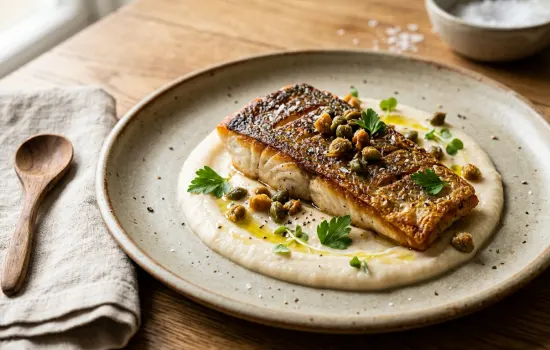
Serves 2 | approx 450 kcal per serving | 40g protein | 33g carbs | 19g fat | 25 min
Ingredients:
- 300g sea bass fillets, skin on
- 240g white beans, drained
- 2 garlic cloves, minced
- 100ml vegetable stock
- 2 tbsp olive oil (28g)
- 2 tbsp capers (30g)
- Juice of half a lemon
- Fresh parsley to finish
- Salt and white pepper
Method:
- Blend white beans, one garlic clove, vegetable stock, 1 tbsp olive oil, lemon juice, salt and white pepper until completely smooth. Warm gently in a saucepan over low heat.
- Pat sea bass completely dry. Score the skin 3 times with a sharp knife. Season both sides with salt and white pepper.
- Heat remaining olive oil in a non-stick pan over high heat. Place fillets skin side down and press gently with a spatula for 10 seconds. Cook 4 minutes until skin is deeply golden and crispy.
- Flip and cook 1 minute on the flesh side. Remove from pan.
- In the same pan, fry capers and remaining garlic 1 minute until crispy and golden.
- Spoon white bean puree onto plates, place sea bass on top skin side up, scatter crispy capers over everything, finish with fresh parsley and serve.
Light protein over something creamy with a bright finish is a formula that travels well beyond lunch. The healthy dinner recipes collection runs on exactly that kind of thinking, proper plates that feel considered without taking over the evening.
Five-Spice Duck Breast with Pak Choi and Sesame Ginger Dressing
The five-spice duck breast is the one I save for days when I want lunch to feel like a real event. The skin comes out lacquered and deeply golden after eight minutes in a cold pan, and the meat stays pink and tender in the middle. The pak choi seared cut side down gets those beautiful charred edges that add a smoky depth to the whole plate. Under 30 minutes start to finish, and it tastes like something you would pay twenty pounds for in a restaurant.
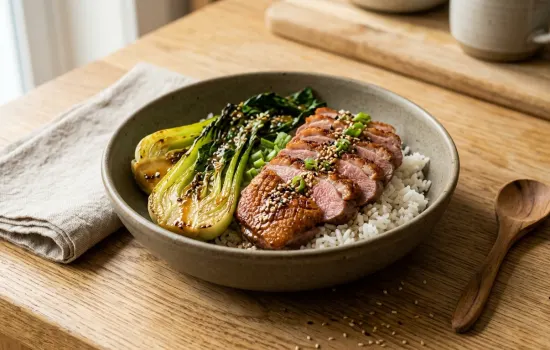
Serves 2 | approx 520 kcal per serving | 34g protein | 27g carbs | 30g fat | 30 min
Ingredients:
- 320g duck breasts (2 breasts)
- 1 tsp five-spice powder
- 200g pak choi, halved lengthways
- 150g cooked jasmine rice (from 70g dry)
- 1 tbsp sesame oil (for searing pak choi)
- Salt and black pepper
- 2 tbsp soy sauce (30ml)
- 1 tbsp sesame oil (for dressing)
- 1 tsp fresh ginger, grated
- 1 tsp honey
- 1 tsp rice vinegar
- 1 tsp sesame seeds
Method:
- Score duck skin in a crosshatch pattern without cutting into the flesh. Rub all over with five-spice powder, salt and black pepper.
- Place duck breasts skin side down in a cold pan. Turn heat to medium and cook 8 minutes, pouring off excess fat twice, until skin is deeply golden and crispy.
- Flip and cook 4 more minutes for medium. Rest 5 minutes then slice diagonally.
- While duck rests, heat 1 tsp sesame oil in the same pan over high heat. Sear pak choi cut side down 2 minutes until golden and slightly charred at the edges.
- Whisk soy sauce, 1 tsp sesame oil, ginger, honey, rice vinegar and sesame seeds together until combined.
- Serve jasmine rice in bowls, pak choi alongside, sliced duck fanned on top, dressing drizzled over everything and serve.
For anyone building a full routine around meals like these, the Healthy Family Dinner Ideas article covers the weeknight structure that makes it all feel manageable rather than ambitious.
How to Make High-Protein Lunches Work on Busy Days
The 45-Minute Sunday Habit
Sunday afternoons are when I do my 45-minute prep session, and that single habit is what makes the whole week work. I cook a large batch of quinoa or brown rice, roast two full trays of vegetables at once while it simmers, and blend a large jar of dressing that stays good in the fridge for five days. Monday through Friday, assembling lunch takes four minutes, not forty.
The beef and duck recipes are both excellent candidates for partial prep. Sear the steak or duck breast, let it rest fully, slice it, and store it in a container. Cold duck sliced over rice with dressing is genuinely delicious, and the beef is wonderful cold over rocket the next day. I do this every week and it never feels like a compromise.
What Preps Well and What Doesn’t
One honest thing I will tell you: fresh fish does not prep well. Sea bass is always better made the morning you eat it, or at lunch itself. The texture changes overnight and the crispy skin never survives a container. So I keep the sea bass bowl for days when I have twenty minutes and want something that feels fresh and light. Knowing which things prep well and which do not saves you from the disappointment of opening a container of soggy fish on a Wednesday.
The whole system sounds like more effort than it is. Once you have a grain cooked, two trays of vegetables roasted, and a jar of dressing in the fridge, the hardest part is already done. You are just stacking things in a bowl at noon, and the result looks and tastes nothing like diet food.
Seeing how lunch fits into a full day of structured eating puts this in perspective. The 1800 calorie meal plan for weight loss maps out breakfast, lunch, and dinner together as one complete picture
What Sharp Afternoons Actually Feel Like
The difference between a lunch that carries you and one that doesn’t isn’t willpower or discipline. It’s just the food. The right protein at noon is quieter than any strategy I’ve tried, and it works without requiring anything from you except thirty minutes in the kitchen and a decent pan.
These meals are not complicated, and they are not punishment for anything. They are just good food that happens to keep you sharp until dinner.
The 3pm crash is optional. I opted out. The full structure, breakfast through dinner, with grocery lists and ten days already mapped out, lives inside my weight loss meal plan.
New lunch ideas and protein-forward recipes show up in the newsletter every now and then, worth joining if midday meals are something you want to keep building on.
Mounir, Healthy lifestyle creator at LeanLife Journey.