My 1800-Calorie Day for Steady, No-Starve Weight Loss
For years I chased the lowest number I could survive on, and every single time I crashed hard by day four. The 1800 calorie meal plan for weight loss I eventually built was the first structure that let me lose fat without feeling like I was punishing myself for existing. In this article I am walking you through exactly how I eat on a full 1800-calorie day, the macro split I use, and a complete sample day with real food worth looking forward to. By the end you will know what 1800 calories actually looks like on a plate, not just on a spreadsheet.
Why 1800 Calories Works for Most People
I used to believe the less I ate, the faster the results. So I tried 1200 calories. Then 1000. I was irritable by noon, obsessing over food by 3pm, and bingeing on everything in sight by Friday night. The cycle was exhausting and it made me feel like I had no willpower, when really the problem was just math working against me.
Here is what I eventually understood. Fat loss happens when your body uses more energy than you give it. That gap does not have to be enormous. A moderate deficit is all you need, and a balanced 1800 calorie plan sits right in that zone for most active adults without triggering the hormonal stress response that comes with aggressive restriction.
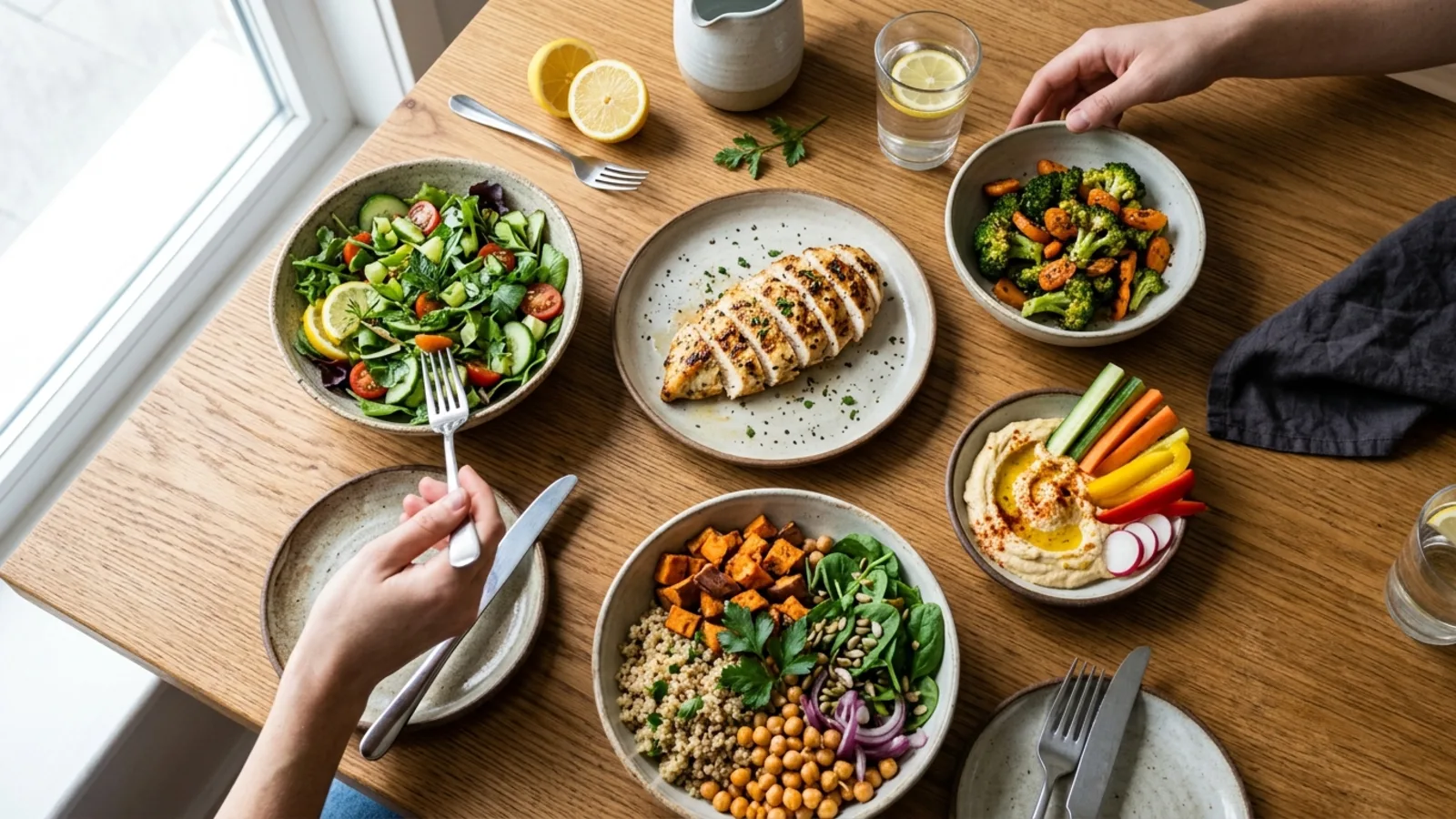
What makes 1800 work is not magic foods or special timing. It is the fact that 1800 calories is enough food to build genuinely satisfying meals. We are talking about a thick slice of whole grain toast layered with creamy almond butter and sliced banana at breakfast, a generous bowl of roasted chicken with herbed grain and crisp greens at lunch, and a proper plate of baked salmon with a glossy drizzle of olive oil and a side of roasted sweet potato at dinner. None of that feels like a diet.
The personal moment I keep coming back to was a Tuesday evening when I sat down to a real meal, something warm and textured and actually good, and realized I was not white-knuckling it anymore. That was the shift. Eating 1800 calories felt like eating, not surviving.
What 1800 kcal Actually Looks Like in a Day
The first time I tried to visualize 1800 calories, I assumed it would feel skimpy. I pictured sad portions and a lot of willpower. What I found instead genuinely surprised me.
Spread across three meals at roughly 450 to 500 calories each and two snacks at around 200 calories each, 1800 calories gives you five proper eating moments throughout the day. No four-hour hunger gaps. No eating a thimble of food and calling it lunch.
Breakfast can be a real bowl of food. Lunch can include a full protein, a hearty grain, and something green and crunchy. Dinner can be warm, rich, and satisfying enough that you finish it and feel settled, not deprived. The two snacks bridge the gaps without being sad handfuls of plain rice cakes. Think a small bowl of thick yogurt with a drizzle of honey and a few crushed walnuts, or a couple of boiled eggs with a little sea salt and a slice of fruit on the side.
I used to eat breakfast standing over the sink in under three minutes. Now my morning bowl is something I actually look forward to the night before. That shift in how I think about food, from fuel I barely tolerate to meals I genuinely want, is where the 1800 calorie diet started clicking for me.
If you want a full rotation of breakfasts built on this same principle, the healthy breakfast recipes I put together cover everything from quick weekday bowls to slower weekend plates. Sweet is not the only direction breakfast can go either. My healthy savory breakfast piece covers the same idea with eggs, lentils, and a few savory options instead.
The recipe below is my go-to weekday breakfast. It takes ten minutes, hits around 480 calories, and keeps me full and focused until lunch without fail.
Greek Yogurt Power Bowl
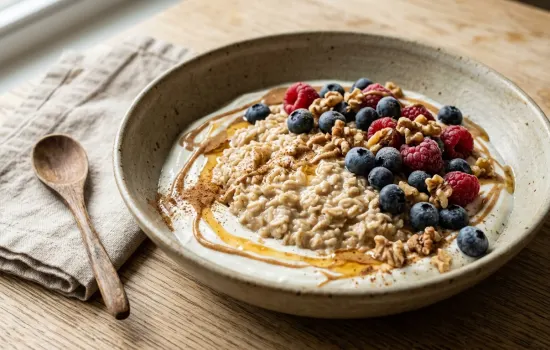
Serves 1 | approx 480 kcal | 10 min
Ingredients:
- 200g thick plain Greek yogurt (full fat)
- 40g rolled oats (dry, quick or old-fashioned)
- 1 tablespoon natural almond butter (approx 16g)
- 1 teaspoon raw honey (approx 7g)
- 80g fresh mixed berries (blueberries, raspberries, or sliced strawberries)
- 15g walnuts, roughly crushed
- 1 pinch of ground cinnamon
- 1 pinch of flaky sea salt
Method:
- Warm the rolled oats with 80ml of water or milk in a small saucepan over medium heat for 3 to 4 minutes, stirring occasionally, until they thicken to a creamy porridge. Remove from heat.
- Spoon the Greek yogurt into a wide bowl and spread it toward the edges so it forms a thick, cool base.
- Pile the warm oats into the center of the yogurt. The contrast of warm oats against cold yogurt is the whole point here, do not skip it.
- Drizzle the almond butter and honey over the top in slow, overlapping lines.
- Scatter the fresh berries and crushed walnuts over everything.
- Finish with a pinch of cinnamon and a tiny pinch of flaky sea salt to sharpen all the flavors. Eat immediately.
This bowl is one of 50 recipes inside my 10-day weight loss meal plan. If you want the full structure with grocery lists and daily meal guides, that is where to start.
Breakfast is the meal that sets the tone for the whole day on this plan. I have a separate guide covering more of my healthy breakfast ideas for weight loss if mornings are where you tend to fall off track.
The Macro Split That Made Everything Click
For a long time I tracked calories but ignored macros entirely. I was hitting 1800 calories on some days but built around bread, a little peanut butter, and whatever I could grab fast. I was always hungry an hour after eating and I could not figure out why.
Then I started thinking about food in three simple roles. Protein builds and protects muscle, which matters for how your body looks as weight comes off. Carbohydrates are fuel, the thing that keeps your brain sharp and your workouts productive. Fats are the lubricant, the thing that keeps hormones balanced and meals genuinely satisfying.
On my 1800 calorie day for fat loss, I aim for roughly 35% of calories from protein, 35% from carbohydrates, and 30% from fat. In grams that lands around 155 to 160g protein, 155 to 160g carbs, and 60g fat. Those numbers sound precise but in practice they are loose targets, not a stress test.
The real insight was understanding why some meals left me full for three hours and others left me restless after one. It came down to whether protein anchored the meal. A lunch built around 150g of baked chicken breast sitting on a bed of warm herbed brown rice, with a handful of rocket leaves and a squeeze of lemon, will hold you in a completely different way than the same calorie count built around mostly starch.
If you want to go deeper on protein-first eating, I put together a full breakdown of the high proein meals I rotate through the week. That article is a good next read.
The snack that helped me most during the weeks I was figuring this out was dead simple, and I still make it most afternoons.
Cottage Cheese and Seed Crispbread
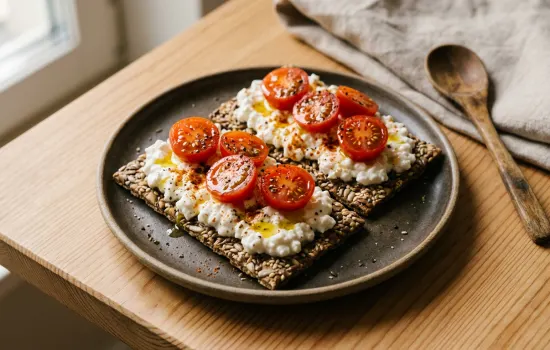
Serves 1 | approx 195 kcal | 5 min
Ingredients:
- 150g low-fat cottage cheese
- 2 seed-based crispbreads (approx 40g total)
- 1 teaspoon extra virgin olive oil
- A pinch of smoked paprika
- 4 to 5 cherry tomatoes, halved
- Freshly cracked black pepper
Method:
- Spread the cottage cheese generously across both crispbreads.
- Arrange the halved cherry tomatoes over the top.
- Drizzle the olive oil across everything in one slow pass.
- Dust with smoked paprika and crack black pepper over the top.
- Eat straight away while the crispbread still has its snap.
A Full Day on My 1800 Calorie Plan
I want to show you what this actually looks like in real life, not a clean chart but the actual texture of the day.
Breakfast is the Greek yogurt power bowl above. Creamy, cold yogurt against warm oats, the pop of fresh berries, the faint bitterness of crushed walnuts. It takes ten minutes and it sets the tone for the whole day.
Mid-morning, around 10:30 or 11, I have my cottage cheese crispbreads. The snap of the seed cracker against the soft, mild cheese and the juicy little hit of cherry tomato keeps me steady until lunch without any of the fog I used to get.
Lunch is where I go warm and grounding. My usual is a bowl built around 130g of roasted chicken thigh, torn into strips over a base of warm herbed grain, finished with a generous spoon of thick garlic yogurt and a scattering of toasted pine nuts. The chicken is golden at the edges, slightly charred, and the garlic yogurt cuts through the richness in exactly the right way. This sits comfortably around 490 calories and I finish it feeling settled, not stuffed.
Lunch is where this plan really earns its keep. If you want more meals built around this same idea, my healthy lunch recipes collection is a good place to explore.
My afternoon snack is simple. A small apple sliced thin alongside 20g of a good nut butter. The sweetness of the apple and the slow-release fat from the nut butter together push me comfortably through to dinner.That combination works but some afternoons need something more structured. My healthy snack bars collection is what I reach for when I want something that actually holds me over.
Dinner is usually my most relaxed meal. Baked white fish with a crust of chopped herbs and a thin drizzle of olive oil, served with a pile of roasted root vegetables that have gone slightly caramelized at the edges. About 480 calories. Warm, unhurried, properly good. If dinner is where you struggle most, I built a full collection of healthy dinner recipes around exactly this kind of meal. Simple, warm, and worth sitting down for.
That is what the 1800 calorie meal plan looks like when you build it on food you actually want to eat.
How to Make It Stick Without Burning Out
The first week I tried any structured plan, I followed it perfectly Monday through Thursday and then fell completely apart on Friday because I had set up zero flexibility. That pattern repeated itself until I stopped treating every meal as a test I had to pass.
The 80/20 rule changed that for me. Eighty percent of my meals follow the plan closely. The other twenty percent have room. A meal out with friends on Saturday night does not unravel a week of solid eating, it is just one meal in a week of meals.
On the practical side, I prep twice a week rather than trying to cook fresh every single day. Sunday I roast a big tray of vegetables and cook a large batch of grain. Wednesday I prep proteins, usually poached chicken breast, a few boiled eggs, and sometimes a tray of baked fish fillets. With those ready in the fridge, assembling a solid 1800 cal meal plan to lose weight takes five minutes instead of forty.
The one habit that surprised me most was walking after dinner. Even ten or fifteen minutes. Not for the calories it burns, those are minimal. But it settles digestion, drops blood sugar spikes from the meal, and signals to my body that the eating part of the day is done. I stopped grazing after dinner almost entirely once this became routine.
The real secret to any balanced 1800 calorie plan is that it only works when the food inside it is worth eating. When you are genuinely looking forward to lunch, you do not need willpower to stay on track. The plan does the work. If you want to stop guessing and follow a structure that is already built, my weight loss meal plan is the cleanest place to start.
The Lunch I Still Make Three Times a Week
Every Thursday without fail I pull together a version of the roasted chicken and grain bowl I mentioned in the sample day. It has never gotten old.
Roasted Chicken and Herb Grain Bowl
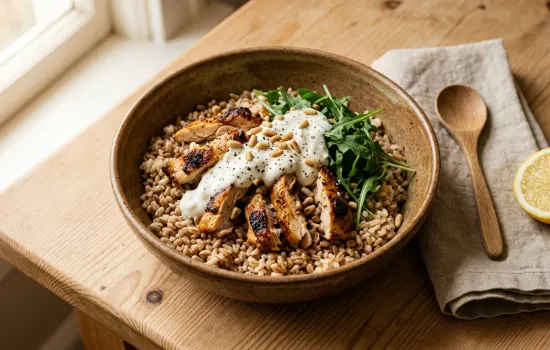
Serves 1 | approx 490 kcal | 30 min
Ingredients:
- 130g boneless chicken thighs
- 80g cooked grain (brown rice, farro, or pearl barley)
- 1 teaspoon olive oil
- 1/2 teaspoon smoked paprika
- 1/2 teaspoon dried oregano
- Salt and black pepper
- 60g thick plain yogurt
- 1 small garlic clove, grated
- A squeeze of fresh lemon
- 1 tablespoon toasted pine nuts
- A handful of rocket or watercress leaves
Method:
- Toss the chicken thighs in olive oil, smoked paprika, oregano, salt, and pepper. Roast at 200C for 22 to 25 minutes until the edges are golden and slightly charred.
- While the chicken rests, stir the grated garlic and a squeeze of lemon into the yogurt with a pinch of salt. Set aside.
- Warm the cooked grain gently in a pan with a splash of water and a pinch of salt.
- Spoon the warm grain into a bowl. Tear the rested chicken over the top in rough strips.
- Add a handful of rocket leaves, spoon the garlic yogurt over everything, and finish with the toasted pine nuts.
- Eat while the chicken is still warm enough to soften the yogurt slightly as it touches.
The day I stopped treating this as a diet bowl and started treating it as something worth making properly was the day the whole 1800 calorie meal plan for weight loss stopped feeling like effort. Now it just feels like lunch.
If you want new recipes and meal ideas sent to your inbox occasionally, you can join the newsletter here.
Mounir, Healthy lifestyle creator at LeanLife Journey.